12 May 2026
Open the weekly sheet before the daily
On Tuesday the daily sheet stays face down until the weekly swings can be said out loud. That order is the whole first evening.
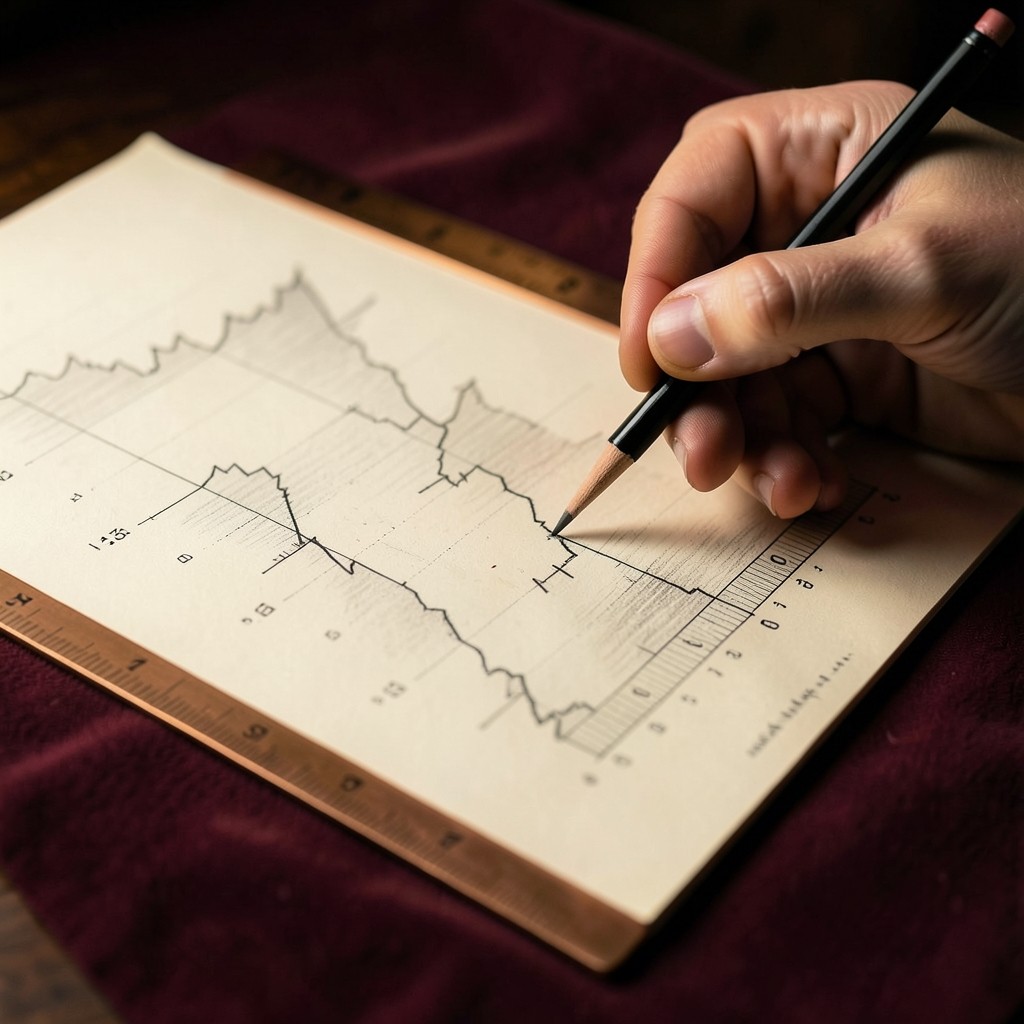
The sheet that is already finished
A weekly candle closes once. By the time a student sits down on Tuesday, last week’s range is a finished fact. The daily chart is still in the middle of its own argument. Starting there feels busy, and the busyness is easy to mistake for information.
At the academy the weekly sheet is the only paper on the desk in week one. Students mark the last swing high, the last swing low, and the range that still holds price. If they cannot point to those three things, the daily is not turned over.
What counts as a swing
A swing, in this room, is a turn you can see without squinting: a high with lower highs on both sides, or a low with higher lows on both sides, on the weekly sheet. A wick that pokes and fails does not become a new swing just because it was the extreme of one week.
Students write the swing in the margin in words. “Lower high after the March peak” is acceptable. A ladder of twelve horizontal lines is not. The desk allows three levels on the weekly sheet. Anything else has to earn a place by replacing one of them.
The Monday rush
People who work along King Kaew often check prices on the way out of a shift. Monday’s daily candle looks decisive at 17:00 and ordinary by Thursday. The journal rule we repeat is simple: if the weekly range has not been marked, Monday’s candle is a note, not a map.
In class we keep a spare daily print in a folder so nobody is punished for being curious. It is simply not the sheet under the pencil until the weekly is done. Students who want the habit without six Tuesdays can meet it once, in compressed form, at the Saturday workshop.