22 July 2026
Keep the level that still exists on the higher sheet
A level worth keeping is a price area you can find again after the lower sheet is taken away. Week three is mostly that test.
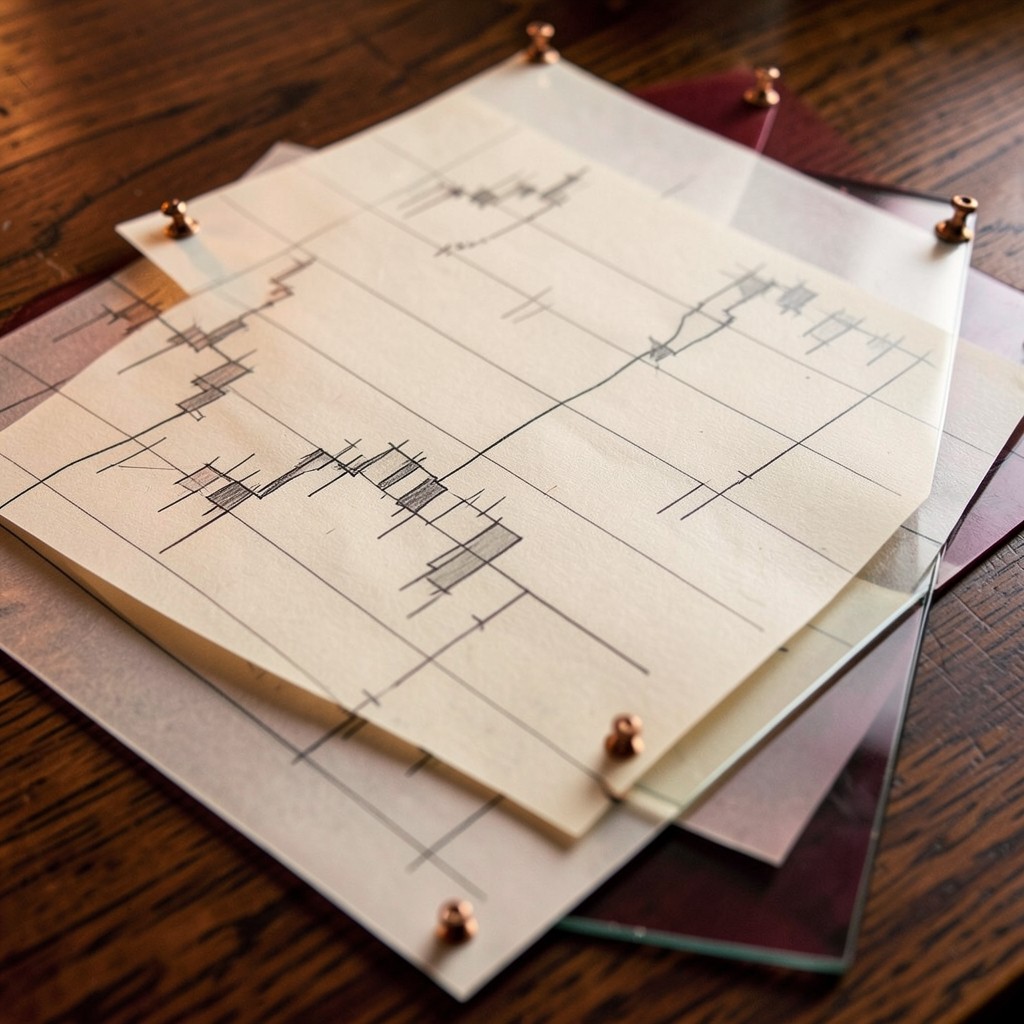
Tracing paper, not a new theory
In week three the desk hands out tracing sheets. Students copy only the weekly swings, lay the daily underneath, and see which daily marks still touch those swings. Marks that float in empty space are erased. The exercise is slow, and it is the part former students mention when they write to us later.
We do not treat a level as a precise tick. On a weekly sheet a level is a small area: the high of a swing, the body of the candle that made it, and a little air around both. If a daily close misses that area by a hair, the conversation is about the area, not about a broken number.
Lines that only appear when you zoom
If a line cannot be drawn until the four-hour sheet is open, it stays on the four-hour sheet. It can time a move the higher sheets already described. It cannot replace them. Students who arrive from chat rooms often have the opposite stack: dozens of intraday lines and a blank weekly.
The room’s limit is deliberate. Three levels on the weekly sheet, and on the daily only the marks that touch them. The four-hour may carry a timing note. It may not carry a private map that contradicts the week.
Saying it in one sentence
Before a line stays, the student has to say what it is. “Weekly lower high from June, daily still respecting it” is enough. “It looks strong” is not. Arisa will wait. The silence is uncomfortable the first time and ordinary by week six.
Take the tracing habit home if you like. A window in the afternoon, two sheets, and the willingness to throw a line away will do more than another indicator printed in the margin.